
A guide to voting in the Scottish Elections
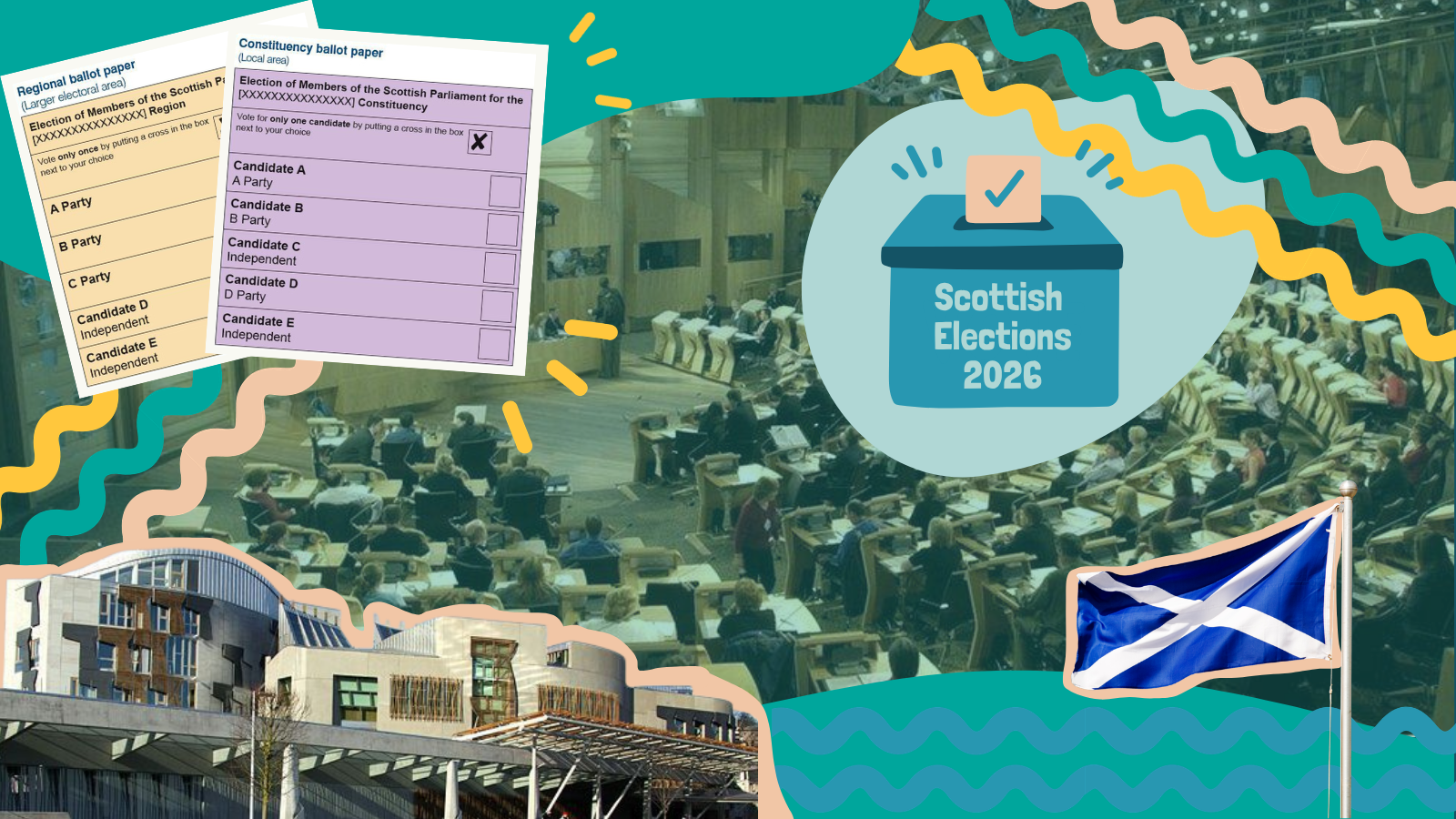
On Thursday 7 May 2026, people across Scotland will head to the polls to elect a new Scottish Parliament. If this is your first time voting, or if Scottish elections still confuse you, you are not alone. So here’s your simple guide to how Holyrood elections work, why they matter, and how your vote is counted.
First things first: what are you voting for?
This election decides who gets elected as Members of the Scottish Parliament (MSPs) at Holyrood in Edinburgh. MSPs make decisions on issues that are devolved to Scotland, including: education, healthcare, transport, housing, and the environment. They do not decide issues reserved for Westminster, such as immigration, defence, and foreign policy.
Unlike a UK General Election, Scottish Parliament elections use a different voting system; you get two ballot papers, and the results are calculated more proportionally. Another major difference is that you only need to be 16 to vote in the Scottish election.
That’s why Scottish elections can feel very different from UK-wide elections, and why the upcoming elections are a vital opportunity for young people to shape the future of Scotland’s seas.
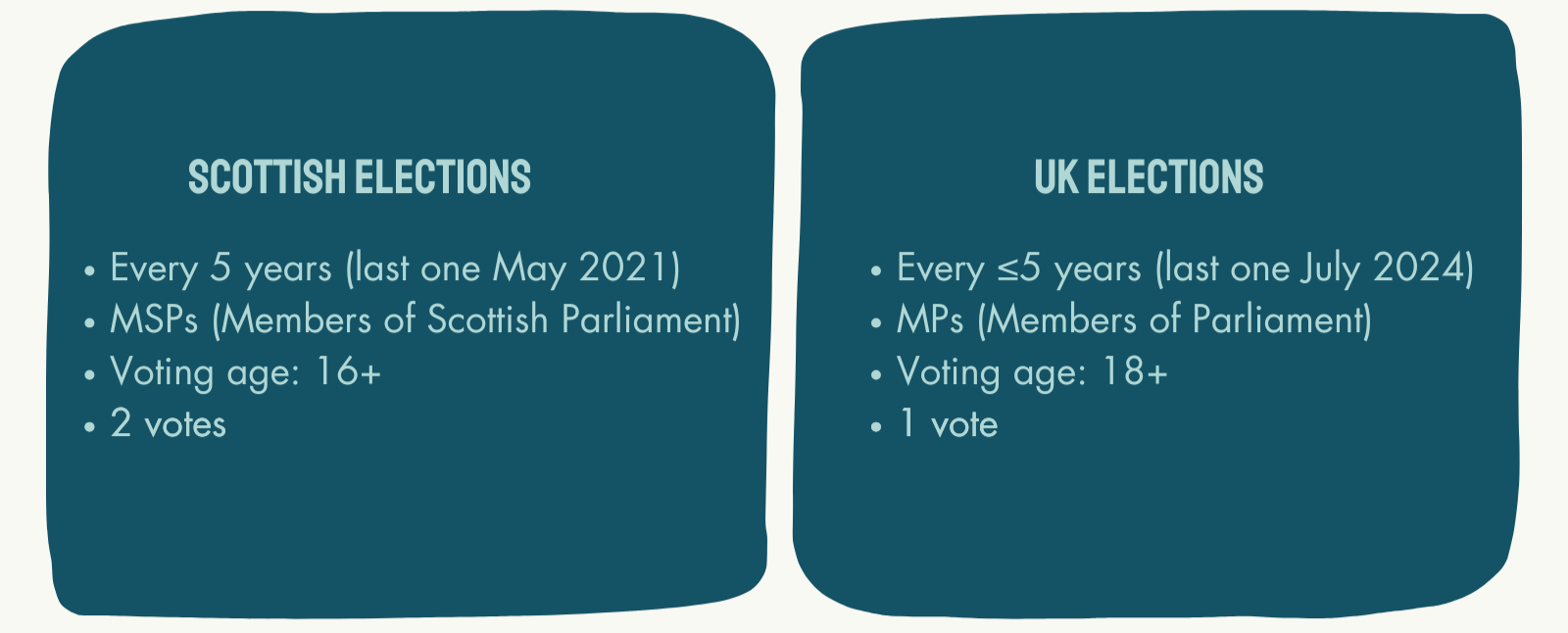
Everyone in Scotland has one MP representing them in Westminster and eight MSPs (one constituency and seven regional) representing them in Holyrood. You can find out your MP and MSPs here.
Why do you get 2 votes?
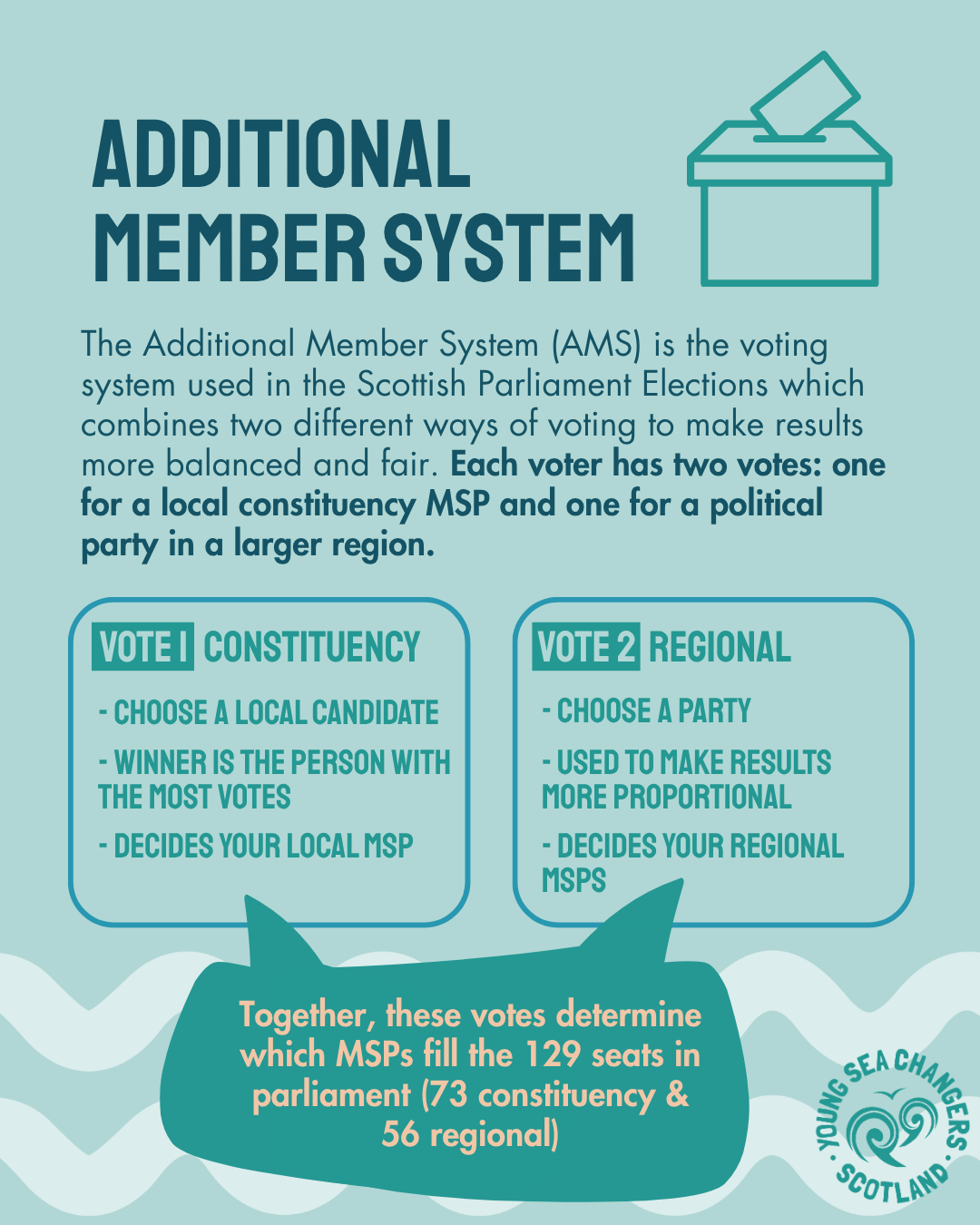
The Scottish Parliament uses something called the Additional Member System (AMS). That means every voter gets a:
1. constituency vote - this decides your local or ‘constituency’ MSP.
2. regional vote -this decides your regional MSPs and helps make the overall Parliament more proportional.
This system was designed so that one party can’t dominate just by narrowly winning lots of seats.
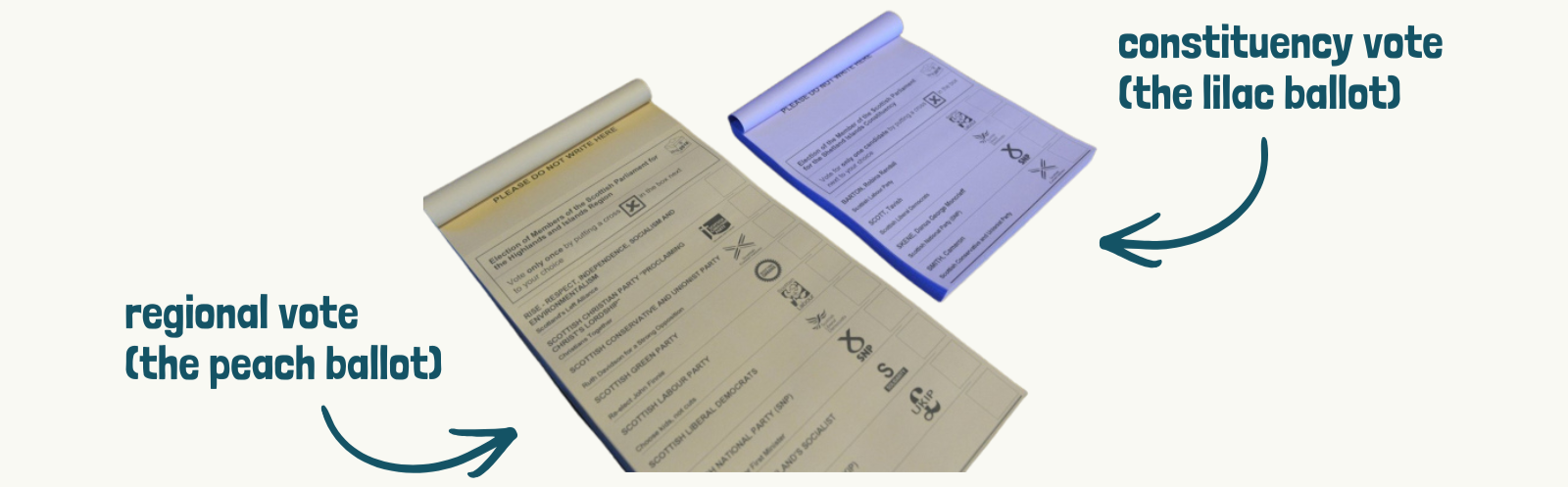
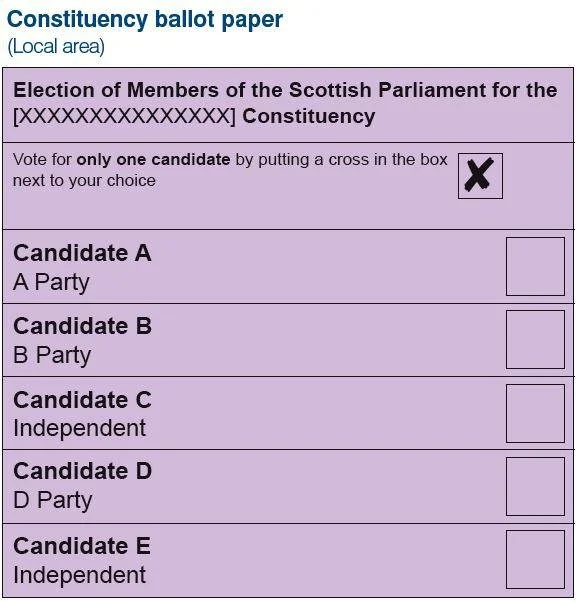
Vote 1: Constituency vote (the lilac ballot)
Scotland is divided into 73 constituencies. For this ballot, you are voting for which candidate you want to represent you in your constituency. The candidate with the most votes will win this constituency seat in parliament. This is called “First Past the Post” and works like a UK General Election.
You can find your constituency candidates here.
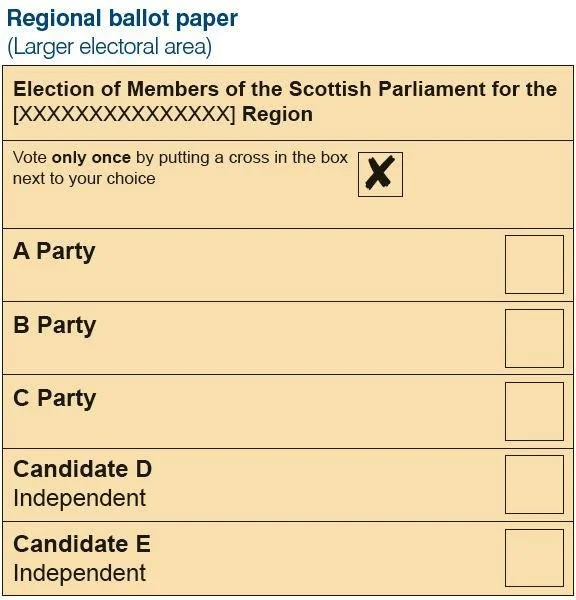
Vote 2: Regional vote (the peach ballot)
You vote for a party (or independent candidate) in your wider region. Scotland is divided into 8 electoral regions: (1) Glasgow, (2) Highlands & Islands, (3) Lothian, (4) Mid Scotland & Fife, (5) North East Scotland, (6) South Scotland, (7) Central Scotland, (8) West Scotland.
Each region elects 7 MSPs - that’s 56 regional MSPs in total. You can find your regional candidates here.
The main parties you’re likely to see on your ballot are the Scottish National Party (SNP), Scottish Labour, Scottish Conservatives, Scottish Liberal Democrats, and the Scottish Greens. In recent years, smaller but increasingly visible parties like Reform UK and Alba have also gained attention, and depending on where you live, you may see candidates from very small or single-issue parties too - such as UKIP, Volt, or independent local campaigners.
To get a better idea of the different parties’ stances on key marine issues, check out our scorecard for the 2026 party manifestos or watch the Scottish Youth Climate Coalition’s Youth Climate & Nature Hustings.
How are the regional seats calculated?
This is where it gets slightly more maths-y. Regional seats are allocated using the ‘D’Hondt system’, where a party’s regional vote is divided by: (the number of seats they’ve already won in that region) + 1.
That includes constituency seats. So if a party has already won lots of local seats, their score is reduced. This helps smaller parties win representation and balances the final result. Check out this SPICe factsheet for an example calculation.

So when it comes time to vote, think about (1) which candidate you want to represent you locally for your lilac ballot and (2) which party (or independent candidate) aligns best with your priorities and values for the peach ballot. So you may find yourself giving both your votes to the same party, or voting for different parties on your regional and constituency ballot.
How many MSPs are there?
There are 129 MSPs in total: 73 constituency MSPs and 56 regional MSPs.
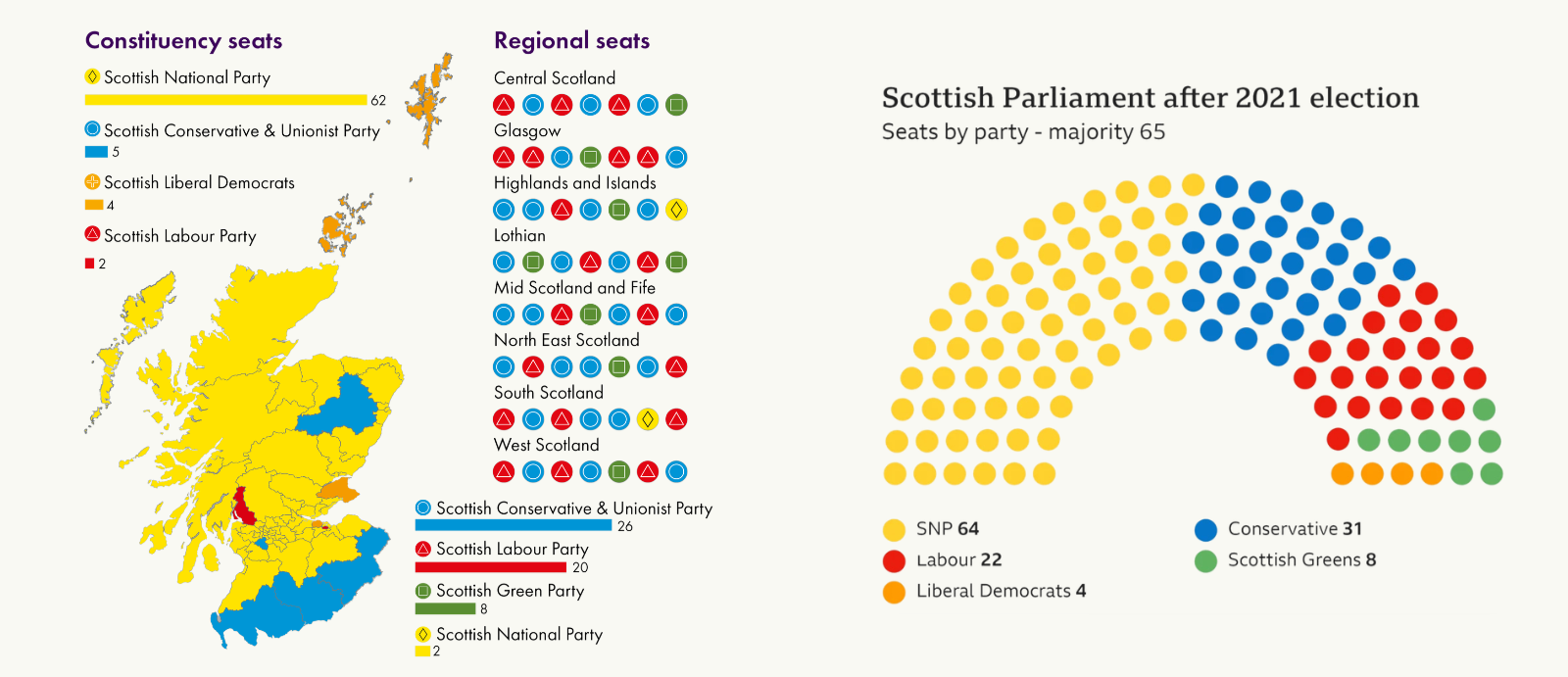
To have a majority government, a party needs at least 65 seats in the Scottish Parliament. If no party reaches 65, which is common under Scotland’s voting system, parties may form a coalition (like Labour and the Lib Dems in 1999 and 2003), make a confidence-and-supply agreement (like the SNP and Greens’ Bute House Agreement from 2021–2024), or govern as a minority, negotiating support issue by issue (like the SNP from 2007–2011).
Here’s what the 2021 election results looked like:
What happens on polling day?
Polling day for the 2026 Scottish Parliament election is Thursday 7 May 2026, and polling stations are usually open from 7am to 10pm.
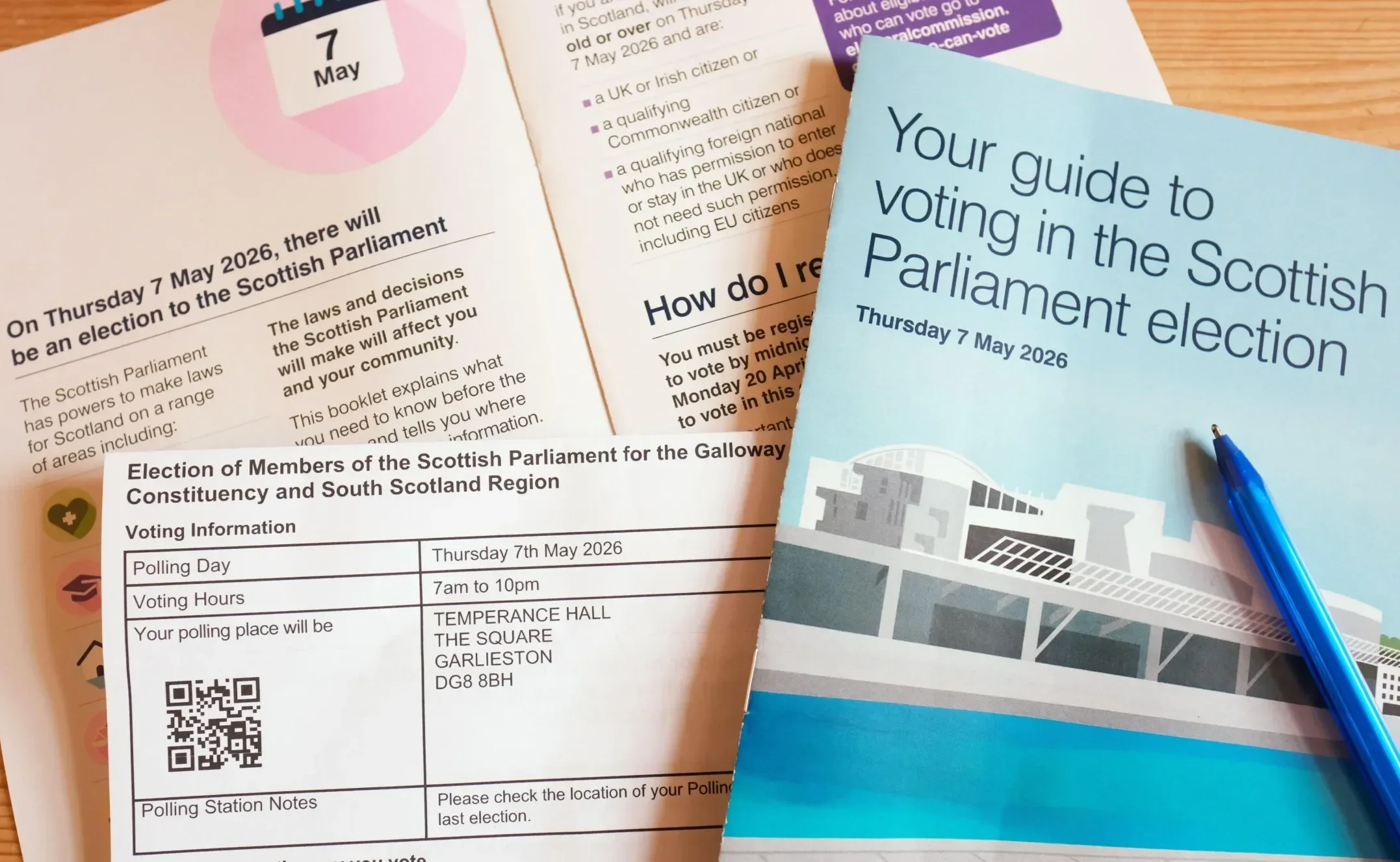
You should have received a polling card in the post (sent around mid-March) that tells you the address of your polling station, its opening times, and whether you are voting in person, by post, or by proxy. You don’t need to bring it with you to vote, but it can make things quicker when you arrive.
Voting in person
Unless you have registered to vote by post or by proxy, you will need to go to your local polling station on May 7th to cast your votes. You can find where your local polling station is here.
Unlike some UK elections, you do not currently need photo ID to vote in Scottish Parliament elections. At the polling station, staff will ask for your name and address, check you’re on the electoral register, and give you two ballot papers. You’ll then go to a private booth and mark one X on each ballot paper to choose your candidates. If you make a mistake, ask the staff for a new ballot paper; they can replace it as long as you haven’t put it in the box.
Voting by post
If you’ve applied for a postal vote, your ballot pack will be sent to your home a few weeks before polling day. Fill out your ballots as you would in person, and don’t forget to sign the postal voting statement. Your vote must arrive by 10pm on polling day, so post it a few working days early, or hand it in at your local polling station or council office before the deadline.
Voting by proxy
If you’ve applied to vote by proxy, that means someone you trust (who is 18 or over and eligible to vote in the election) will go to your polling station on election day and vote on your behalf.
If something unexpected happens and you can’t vote in person (for example illness or an emergency), you may be able to apply for an emergency proxy vote closer to polling day.
Why does your vote matter for Scotland’s seas?
From marine protection to fishing policy, most of the decisions about Scotland’s seas are made at Holyrood, so who you choose to fill those seats matters. We are supposed to be on track to halting biodiversity loss by 2030, which is well within the lifetime of this parliament session.
So make sure to cast your votes on May 7th and help shape the future of Scotland’s Seas.