Scotland’s Climate Change Plan
What is the Climate Change Plan?
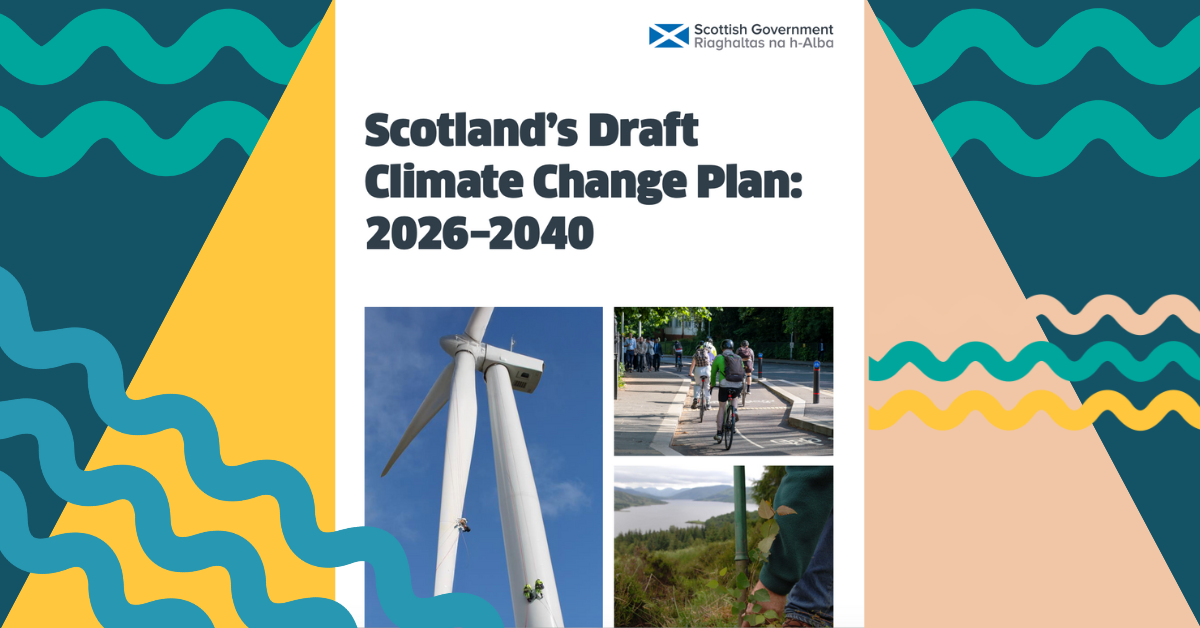
Scotland’s Climate Change Plan (2026–2040) is the government’s roadmap for how we cut emissions, protect nature and move towards net zero. It sets out actions across energy, transport, land use and, importantly for us, the marine environment.
These next 15 years are vital to tackling climate change, and if the Scottish Government doesn’t get it right, our generation will be hit hardest by the consequences.
Why is the plan important for our marine environment?
Scotland’s seas play a huge role in tackling climate change. Healthy oceans store carbon, protect coastlines, support wildlife and sustain fishing and coastal communities. While we were glad to see the marine environment mentioned in the draft plan, we’re concerned that this draft lacks a clear plan for Scotland’s marine environment over these crucial decades. Without a clear explanation of what will actually happen, when, or how progress will be tracked, the plan risks being more words than impact.
What we are asking for?
Clear actions
A major issue is that many of the marine actions in the plan aren’t new, and some have already been delayed for years. Key policies to protect marine habitats, manage fisheries, and safeguard “blue carbon” (carbon stored in seabeds, saltmarsh and seagrass) lack clear, practical steps. The final plan must set out clear actions and goals to help marine ecosystems and industries cope with climate change - this includes clear timelines and ways to measure progress.
Marine protection
Climate change doesn’t affect the ocean in isolation. Scotland’s seas are already under pressure from overfishing, pollution and habitat damage - and climate change adds another layer of stress. The draft plan doesn’t set out clear actions to protect important marine habitats like from these combined impacts. Even if Scotland reaches net zero, marine ecosystems won’t be able to cope unless these other pressures are tackled too. The plan must include measures to better protect and restore our marine environment from threats such overfishing, habitat destruction, and pollution.
Precautionary approach
We’re calling for a precautionary approach, especially when it comes to fishing and carbon-rich seabed habitats. This means acting now to protect vulnerable habitats, rather than waiting for perfect data while damage continues. Specifically, the plan must support the delivery of proper fisheries management in Scotland’s inshore Marine Protected Areas and commit to more research and real action to protect blue carbon habitats and cut emissions from the fishing industry.
A just transition towards cleaner energy
We welcome the plan’s support for renewable energy and its opposition to coal, fracking and onshore oil and gas. But there’s a noticeable silence on offshore oil and gas, missing a chance for Scotland to show leadership and support a just transition for workers and communities. Also, while renewables like offshore wind are part of the solution, they must be developed in the right places and at the right scale, without damaging marine wildlife and habitats. The plan must set out steps for Scotland’s just transition away from oil and gas.
More accessibility
Another big issue is how the consultation itself was designed. Marine issues were hidden at the back of the document, and none of the questions focused directly on the sea. Young people often volunteer their time to engage in consultations and complicated documents and inaccessible formats create barriers and risk shutting voices out. Future engagement on this plan should be designed so people can easily take part in the issues they care most about. The plan also needs to give the marine environment more priority, recognising how important our seas are for the climate and how vulnerable they are to climate change.
If you want to learn more, check out our climate change jargon buster and read our consultation response. Also, make sure your voices are heard by sharing your views on the consultation hub or by emailing climatechangeplan@gov.scot by the end of the day!