By ‘the future we hope to sea’, our youth-led MPA campaign
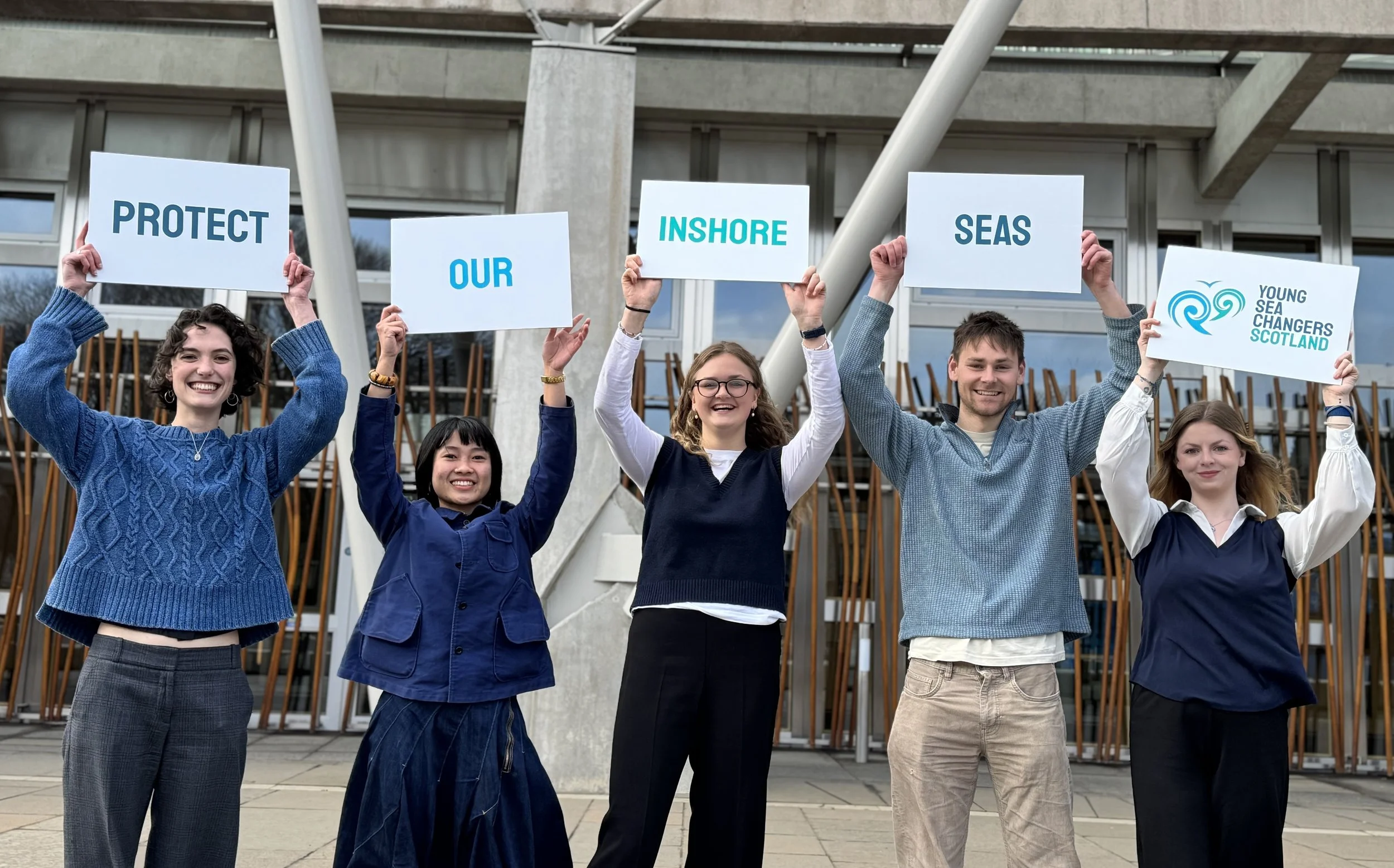
The consultation on fisheries management measures to protect inshore Marine Protected Areas (MPAs) and Priority Marine Features (PMFs) is long overdue, with repeated delays since 2016. Without management in place, MPAs are no more than ‘Paper Parks’ - lines on a map which denote an area, but which, in practice, provide no real protection. And despite 81 habitats and species being ‘prioritised’ for conservation importance (PMFs), many have also remained subjected to pressures and consequent degradation and even now, management will only be consulted on for 11 of these PMFs in the upcoming consultation.
In the past decade, Scotland’s marine ecosystems and species have continued to decline. A recent report found that Ministers are failing in their legal duty to protect the seabed. 70% of seabird species are in decline. Scotland’s last marine assessment, SMA 2020 (which is now several years old), found that the ‘no loss in extent’ target for subtidal biogenic habitats (e.g. blue mussel beds, horse mussel beds, serpulid aggregations, cold water coral and maerl beds) had not been met in certain regions. Significant declines in seagrass have been recorded across Scotland. Populations of commercial fish species, which were once abundant and supported thriving fishing communities, have since decreased, with several stocks altogether collapsing.
In 2016, many of YSCS' members were still in school - whether primary or secondary. We have grown up alongside these declines. We have heard stories from others who have lived by or worked on the sea, as they’ve wistfully recounted days of abundance; harbours filled with so many vessels you could cross the decks from one end to the next, seas broiling with life and diversity, technicolour ecosystems. Stories which always conclude with crestfallen reflection on what’s been lost. Some of our members, who’ve grown up by the sea, have witnessed substantial change for themselves in just a short period. And for others, all we know and have seen in our seas is what’s there now… and that’s just what’s left.
But we aren’t willing to accept that. We know that marine ecosystems have an incredible capacity to recover, if allowed to do so. By managing fisheries sustainably and removing the most damaging pressures they face, habitats and species can bounce back. In turn, this supports their resilience to the increasing effects of climate change. And this doesn’t have to come at the cost of coastal and island communities, for whom our seas are so integral to culture, language, and livelihoods. Healthy seas support a variety of marine industries, from fisheries to ecotourism and recreation, with the benefits rippling throughout coastal and island communities, and Scotland more widely.
High-Level Positions
To secure recovery and to protect sensitive habitats and species, YSCS members ask that:
For MPAs:
Bottom-towed fishing methods (i.e. bottom-trawling and scallop dredging) are prohibited across MPAs which are designated to protect seabed habitats from harm and allow for their recovery, and to preserve blue carbon (i.e. carbon stored in marine habitats).
Introduce measures to reduce the accidental catch of seabirds and marine mammals in static gear (i.e. longlines, gillnets, fyke nets and other set nets) where they pose a significant risk in MPAs, including potentially banning such methods within Special Protected Areas (SPAs) and Special Areas of Conservation (SACs)
Prohibit fishing of forage fish, which are important sources of food for seabirds, within SPAs (where this is recommended by NatureScot.)
Implement recommendations proposed by the Scottish Entanglement Alliance to address entanglement of whales, dolphins and porpoises in creel ropes
All fishing vessels operating in MPAs must use Remote Electronic Monitoring (REM) and Vessel Monitoring Systems (VMS) to help monitor activity, ensure rules are followed, support enforcement and collect data, such as information on accidental catches (bycatch).
Any extra pressure on fishing areas caused by fishing activity moving elsewhere must be managed. This could include reducing fishing activity, supporting fishers to explore other ways of fishing or making a living, and improving how we manage what activities happen where outside MPAs
Properly funded monitoring systems must be put in place to check whether management measures are working effectively.
For PMFs:
Of the proposed options, Option 2 is most preferable (larger area protected). This will allow for a greater buffer zone against bottom-towed fishing, which these11 PMFs have been identified as most at risk from.
However, the proposed measures (Options 1 and 2) are unlikely to be enough to improve seabed health and could simply maintain its current degraded state rather than promoting its recovery. A flexible coastal limit on bottom-trawling and scallop dredging could allow the seabed to recover by reducing damage to sensitive coastal habitats.
Achieving Good Environmental Status (GES) will require considering management measures for all 81PMFs, not just the11 included in this consultation. Currently, most indicators of GES are not being met, with seabirds, seabed habitats, and fish communities all declining. More ambitious action, which considers all PMFs in Scottish seas, is required.
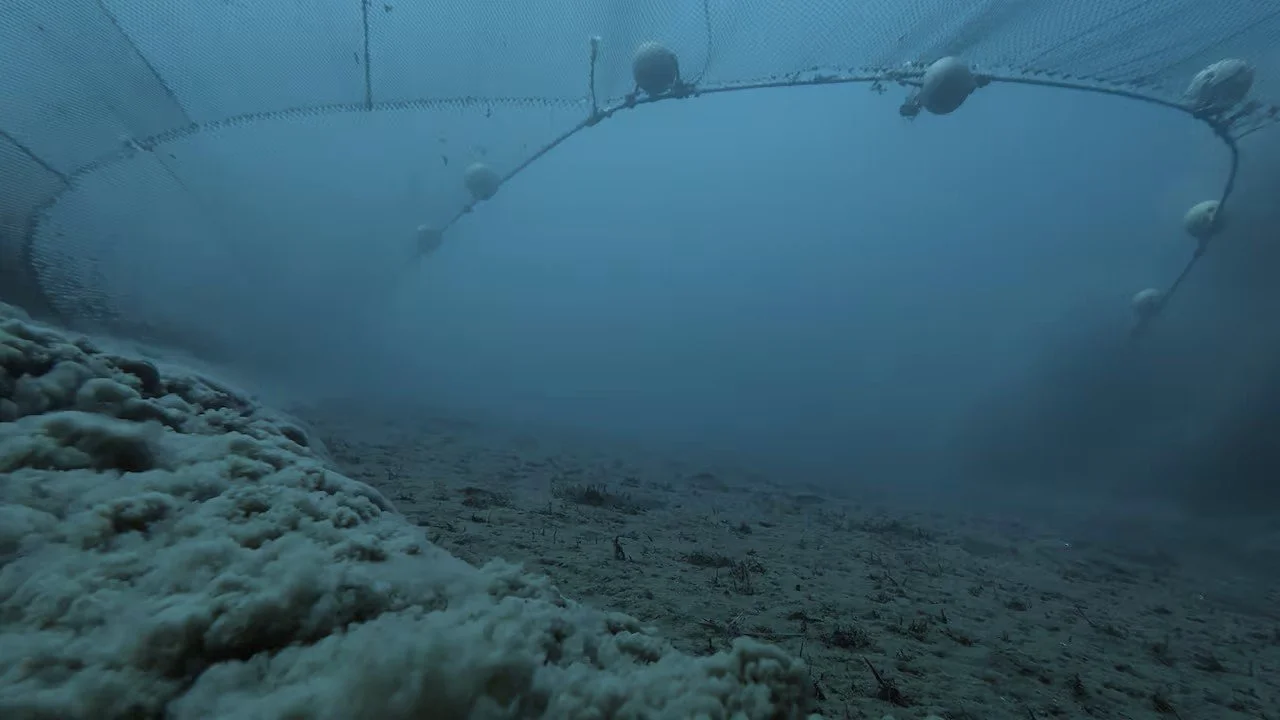
Bottom trawling from: Ocean by David Attenborough