
My Six-Week Expedition to the Outer Hebrides
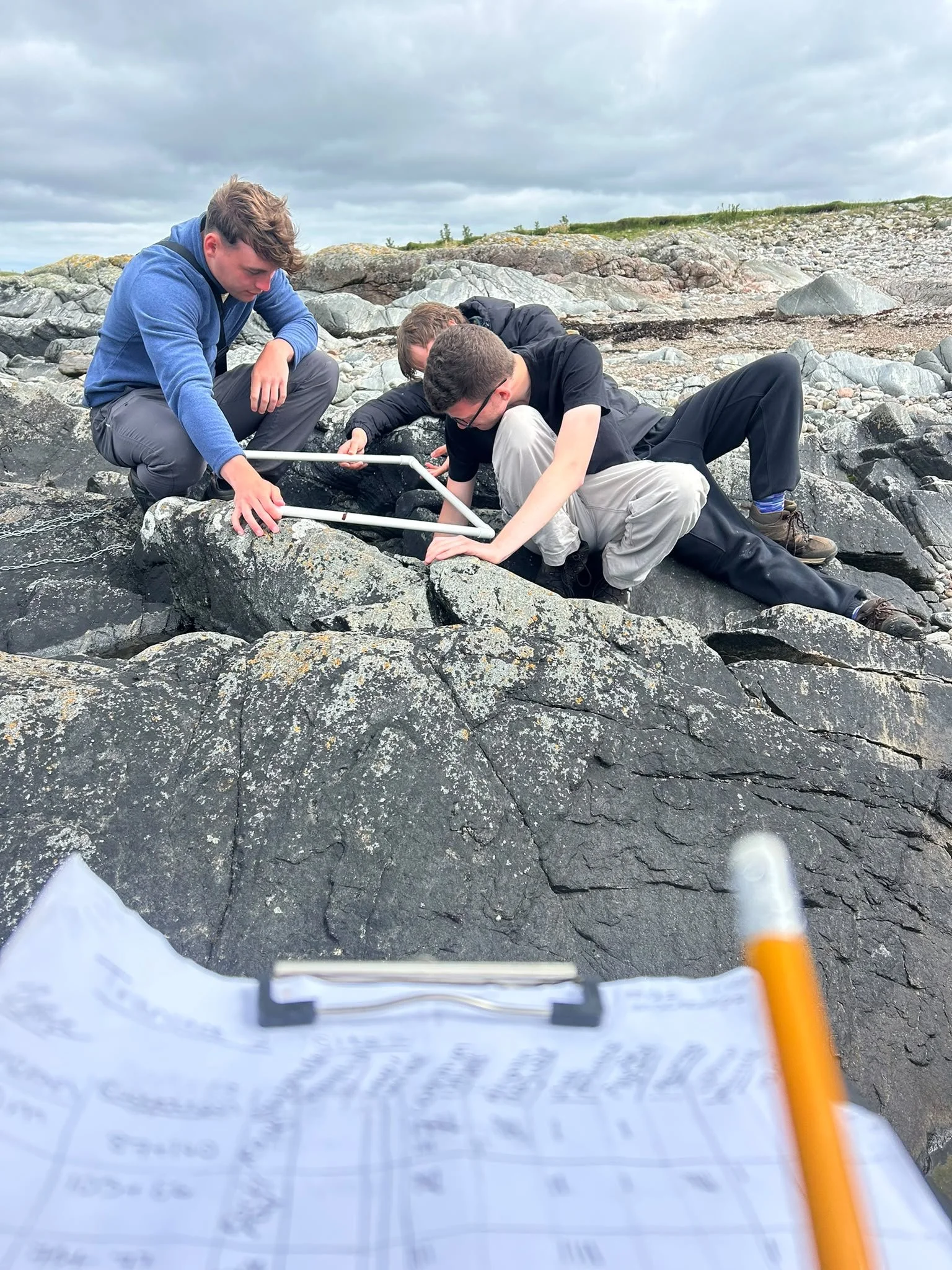
Image: Ewan and others conducting a rocky shore survey using a quadrat.
This summer, the Youth Ocean Action Fund helped fund my 6-week expedition to the Outer Hebrides, where I studied how the microtopography of rocky shores affects biodiversity. I have always been curious to learn what causes animals to inhabit certain areas, and why two similar spots can have such a drastic difference in species.
I wanted to do this expedition as an opportunity to undertake my very own project with complete freedom over the topic. Designing a project like this is an essential skill for any young person looking to go into research. It also meant I had the opportunity to learn new fieldwork skills – commonly used techniques from the scientific literature. I was also chosen to be one of two co-leaders of the expedition, which had 7 other members. This gave me valuable leadership experience, something that will stick with me for life.
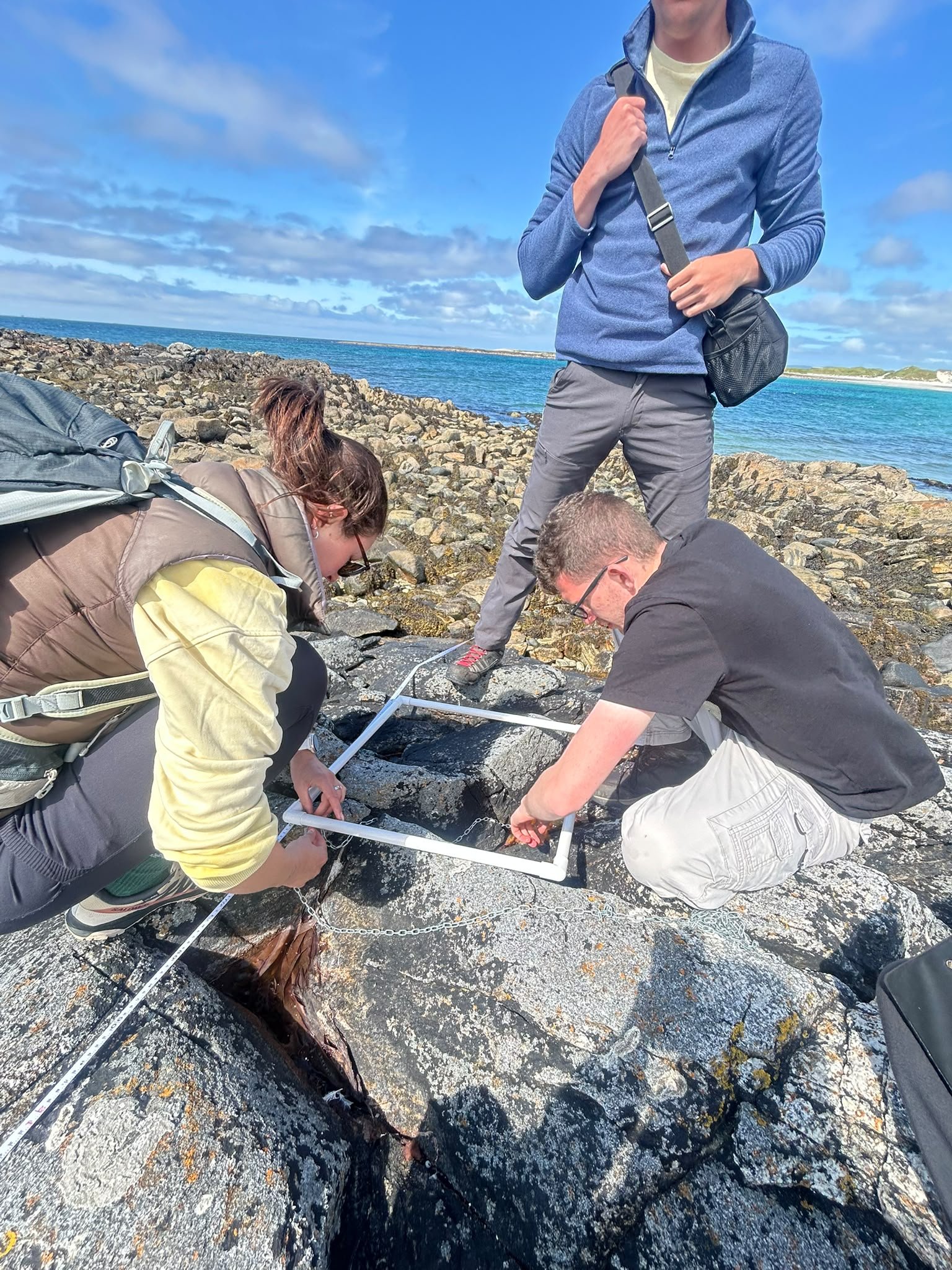
Image: Ewan measuring surface roughness using the chain method.
With the expedition being as long as six weeks, fundraising could only take us so far to reaching our budget. One of the biggest costs was fuel, which was covered by a grant from the Youth Ocean Action Fund. This made the expedition possible, especially during a period when fuel prices are so high.
I carried out my fieldwork at sites in Benbecula and South Uist. I would use transects at each site and placed quadrats at certain points. I would then record each invertebrate found in the quadrat, including periwinkles, crabs, shrimps, sea sponges, anemones and many more. The tricky part was measuring the topography, or ‘roughness’, of the quadrat. I used the ‘chain method’ which involved using a steel chain with small links. I would put the chain from one corner of the quadrat to the other, allowing the chain to fill any crevice or dip in the surface rock. The length of chain used allowed me to calculate a roughness index for the quadrat. Then came the fun part, counting every species I could find.
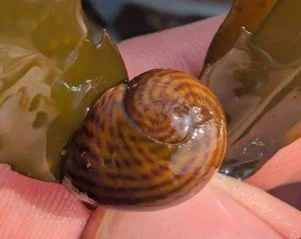
Image: A periwinkle on seaweed.
Some quadrats had nothing but limpets, others had a vast range of periwinkles, crustaceans and other animals – some of which I had never even seen before. I am very much an outdoors person, so the chance to do such hands-on work out in nature was something that I could never turn down.
The data I gathered confirmed one of the core hypotheses of the study: roughness affects species diversity.
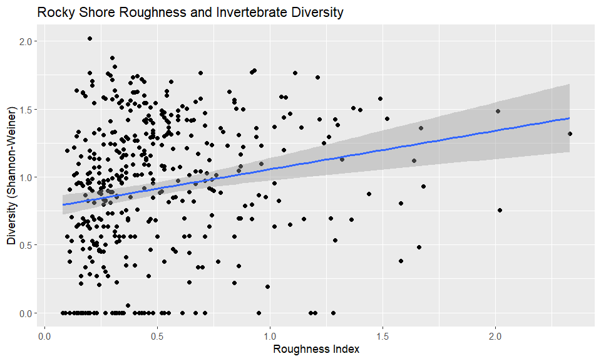
Image: Graph showing how rocky shore species diversity correlates with roughness.
The study returning a positive correlation made it all the more satisfying. Ideally, I would like my data to be used as evidence to encourage eco-engineering, which involves making man-made structures more eco-friendly. An example of this could be adding rough-textured tiles to add complexity to seawalls, a method proven to increase biodiversity.
I want to give a huge thank you to Young Sea Changers Scotland for supporting my expedition. Through this I have gained a vast range of leadership, teamwork and research skills which I am sure will benefit me when starting a career in research.